Good bedding does more than cover the floor. It absorbs moisture from droppings, controls ammonia, cushions your birds' feet, and makes cleaning day faster. The wrong bedding turns your coop into a damp, smelly mess. The right bedding makes it nearly maintenance-free between weekly spot cleans.
There are three main types: pine shavings (the classic default), hemp hurd (the newer, higher-performing option), and straw (cheap but less absorbent). We're focusing on the two that matter most — pine and hemp — with the best product in each category.
How to Choose Coop Bedding
Four things to weigh when picking bedding:
Absorbency — This is the #1 factor. Droppings are mostly water. Bedding that can't absorb fast enough stays damp, which breeds bacteria and ammonia. Hemp absorbs 4–5× its weight; pine absorbs about 2–3×.
Dust — Chickens have sensitive respiratory systems. High-dust bedding causes chronic respiratory disease (CRD) over time. Both picks below are marketed as low-dust, but hemp is naturally lower.
Odor control — Ammonia from droppings is the biggest coop smell issue. Better absorbency = better odor control. If your coop smells like ammonia when you open the door, your bedding isn't doing its job.
Cost per change — Pine is cheaper per bag, but you change it more often. Hemp costs more upfront but lasts 2–3× longer between full changes. Over a year, they often come out close to even.
Our Top 2 Picks
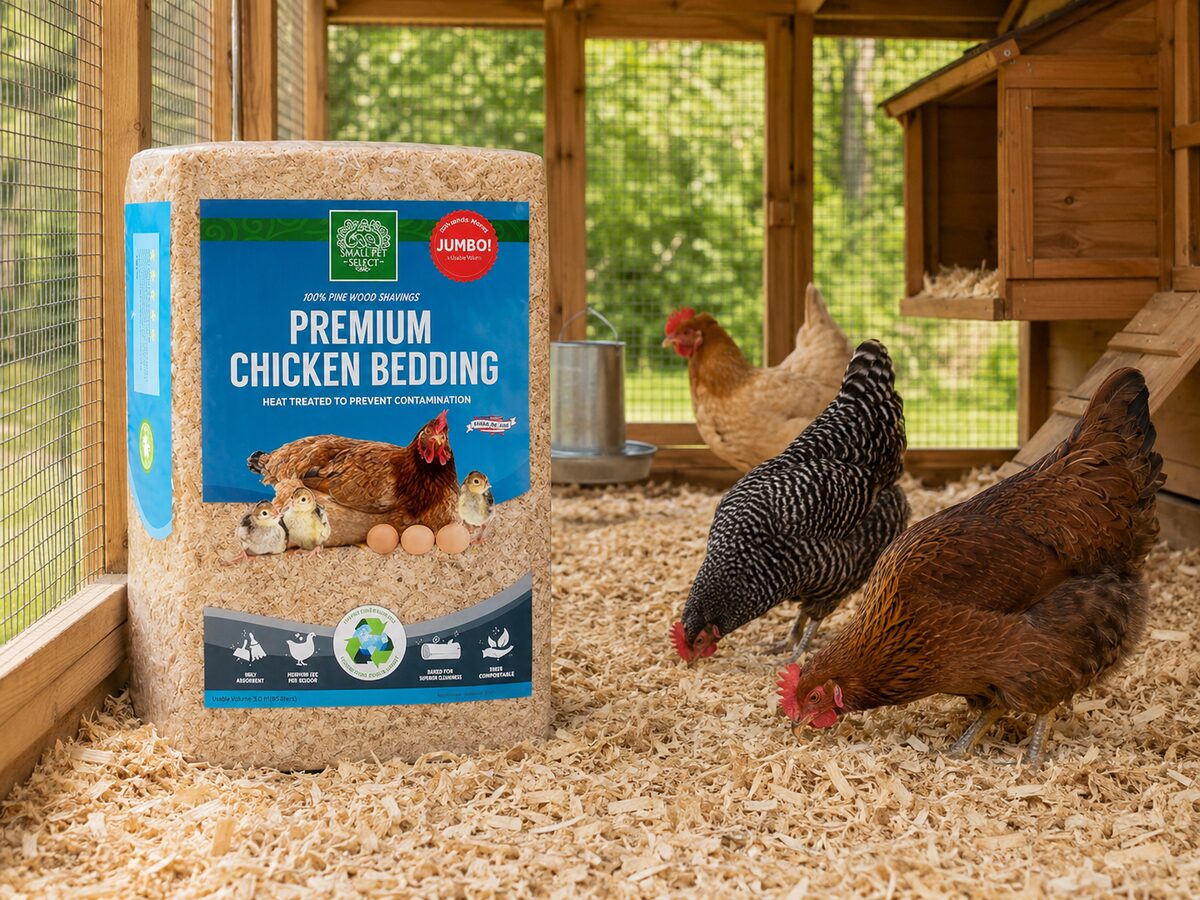
Small Pet Select Premium Chicken Bedding
Pine shavings · Kiln-dried · Heat-treated · 185 liters
Pros
- Heat-treated to eliminate contaminants
- Large bag — great value for the volume
- Low dust compared to feed store brands
- Composts easily after coop cleanouts
- Pleasant natural pine scent
Cons
- Less absorbent than hemp per volume
- Needs changing every 1–2 weeks
- Heavier than hemp (harder to carry)
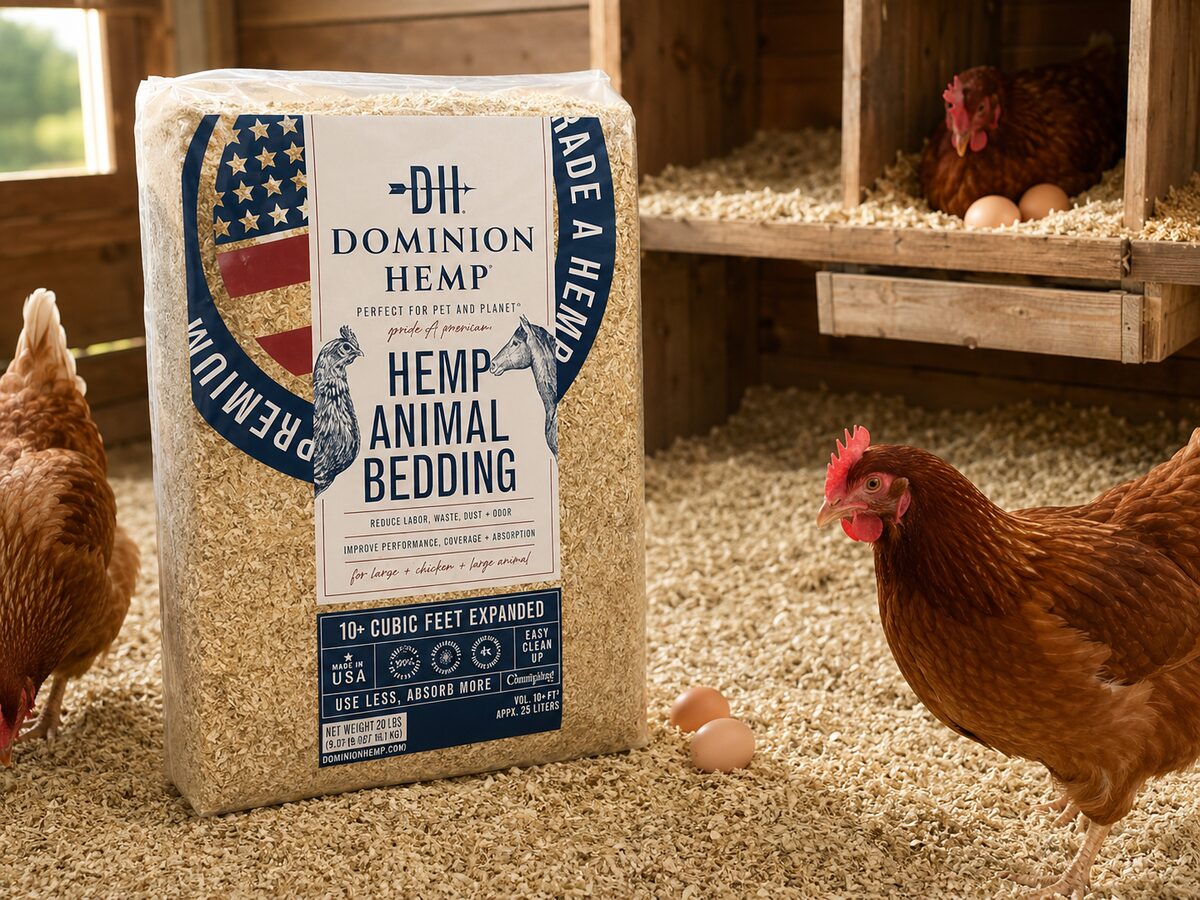
Dominion Hemp Premium Animal Bedding
Hemp hurd · Made in USA · 10+ cu ft expanded · 20 lbs
Pros
- Absorbs 4–5× its weight in moisture
- Virtually dust-free — excellent for respiratory health
- Superior odor control vs pine
- Lasts 2–3× longer between full changes
- Composts faster than pine shavings
- Lightweight and easy to spread
Cons
- Higher upfront cost per bag
- Less widely available than pine
- No pine scent (neutral smell)
The Bottom Line
If you want the easiest, most affordable option, go with Small Pet Select pine shavings. Pine works, it's cheap, and it's what most chicken keepers use.
If you want less frequent changes, less dust, and better moisture control, switch to Dominion Hemp. The upfront cost is higher, but you'll change bedding half as often — so the yearly cost is comparable.
Either way, avoid cedar shavings (toxic oils irritate chickens' respiratory systems) and newspaper (poor absorbency, gets matted and slippery).
Pro Tips: Getting More Out of Your Bedding
The deep litter method: Instead of stripping the coop weekly, add fresh bedding on top of the old layer every few days. The bottom layers compost in place, generating gentle heat in winter. Do a full cleanout every 3–6 months. Hemp works best for this because it breaks down faster and absorbs more.
Spot clean daily: Scrape droppings from under the roost bars each morning. This takes 2 minutes and extends your full-change interval dramatically.
Use more bedding than you think: A 3–4 inch layer is the minimum. 6 inches is better, especially in winter. Thin bedding gets saturated fast and creates ammonia problems.
Ammonia test: Kneel or sit at chicken height in your coop. If your eyes sting or you smell ammonia, the bedding needs changing — regardless of how long it's been. Chickens sleep with their faces in this stuff, so air quality at floor level is what matters.